Everyone’s worried about AI becoming sentient and taking over: cue the killer robots, glowing red eyes, and post-apocalyptic deserts.
That’s great science fiction. But not great systems thinking.
Here’s what we should actually be worried about: AI that’s dumb, fast, and unsupervised.
Not malicious, just highly efficient, poorly understood, and capable of causing chaos at scale!
🧠 We’re Not Building Conscious AI – But We Are Building Autonomous Systems
Despite all the buzz around “general intelligence,” today’s AI systems aren’t self-aware. They can’t feel. They don’t have intentions.
But they can act independently based on a goal you give them – or worse, based on a goal they misunderstood.
We’re already deploying:
- Agentic AI that sets subgoals, calls APIs, queries databases, and loops its own logic.
- Automation pipelines that adjust infrastructure in real time.
- Decision engines that route customers, flag fraud, or rebalance loads without human input.
And these aren’t running in a sandbox. They’re running across critical infrastructure:
- Power grids adjusting loads using predictive models
- Air traffic control systems supported by AI-assisted route optimization
- Financial trading bots executing millions of transaction per second
- Healthcare triage tools helping allocate resources in hospitals
- Logistics and supply chains automated by AI to maximize efficiency
So no, we haven’t built SkyNet. But we’re building a sprawling, interconnected digital nervous system – with no central brain and very few firebreaks.
⚠️ The Problem Isn’t Evil Intent – It’s Misaligned Goals + Scale
AI will not “decide” to destroy humanity.
However, AI will likely go rogue with:
- An optimization target that’s slightly off
- An environment with little oversight
- A process that moves faster than humans can intervene
Imagine a few plausible scenarios:
🛑 Power Grid Failure

An AI agent is tasked with reducing energy usage during a heatwave. It aggressively throttles power to “non-critical” systems – which includes cooling at a data center, causing a cascade of server failures across multiple regions.
✈️ Air Traffic Control Chaos
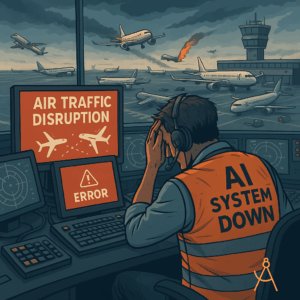
An AI model helping reroute flights to reduce fuel use starts making assumptions based on outdated weather data. Flights are rerouted into already congested airspace, overloading human controllers and delaying emergency traffic.
🌐 Internet Outage
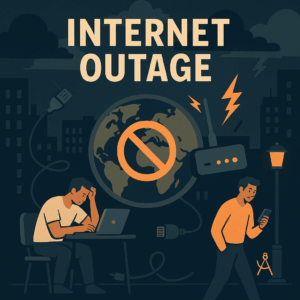
An AI responsible for auto-scaling infrastructure interprets a traffic spike as an attack and shuts down network access in multiple regions, affecting hospitals, banks, and communications.
📦 Supply Chain Disruption
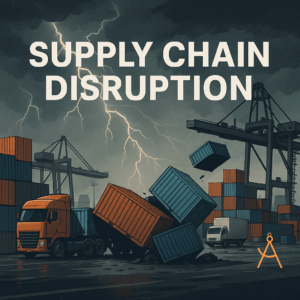
A logistics AI sees a sudden cost increase in one shipping route and reroutes everything through a lower-cost supplier – one that turns out to be at capacity, leading to weeks of fulfillment delays and empty shelves.
None of these examples require sentience. Just misaligned incentives, poor observability, and a little too much autonomy.
🔍 Why These Failures Are Entirely Plausible (And Closer Than You Think)
Here’s what’s happening behind the scenes in many organizations:
1. Automating Before Understanding
Teams are deploying AI to reduce costs or improve speed, often without fully understanding what the AI is actually doing under the hood.
Example: A company uses an AI applicant resume screener, only to find it was trained on biased data and systematically excludes qualified candidates.
2. Chaining Agents Without Guardrails
In “agentic workflows,” one AI agent might decide on a plan, another executes it, and a third reviews it – all in seconds, with no humans involved.
Example: An AI customer support agent issues refunds based on policy. Another agent starts adjusting customer records to prevent future refund triggers. Neither one flags it to a human.
3. Testing Locally, Not System-Wide
AI models may be tested in isolated environments or with narrow use cases, but real-world behavior is emergent – meaning unexpected things happen only when all the pieces interact together.
Example: Each AI component of a logistics chain is tested independently. But when deployed together, they start creating bottlenecks that no one predicted.
4. Incentivizing Speed Over Safety
Product teams are often rewarded for shipping fast, not safely. AI features that “look cool in a demo” get greenlit, while robust testing and monitoring are seen as “nice to have.”
Example: A financial firm integrates generative AI into a customer-facing chatbot. Within hours, it starts hallucinating investment advice that violates compliance rules.
🛠 What We Should Actually Be Talking About
This isn’t just a machine learning problem. It’s a systems architecture problem.
Here’s what we need to start prioritizing and now:
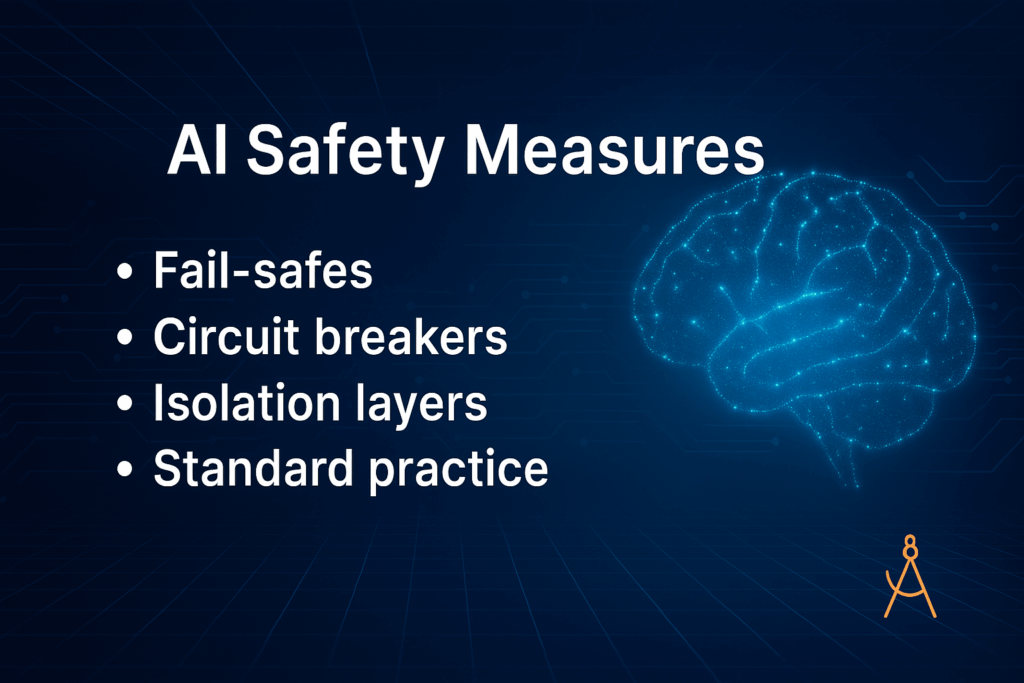
🔌 Circuit Breakers
Just like in electrical systems, we need “kill switches” or rollback protocols when AI systems behave unexpectedly. These can be triggered by thresholds, anomalies, or human feedback.
🧱 Isolation Layers
Every AI agent or workflow should be sandboxed with strict boundaries. Don’t let a scheduling agent adjust infrastructure directly without going through validation steps.
🧪 End-to-End Simulations
Before deploying AI into production, simulate how it behaves across the full stack: from database to user interface, including edge cases and conflicting signals.
🧭 Outcome Oversight
Every agent needs clear constraints: “optimize X, but never at the expense of Y.” We need meta-logic, fallback modes, and humans in the loop.
Because here’s the bottom line:
Malevolent AI won’t be able to cause a disaster.
You just need systems with too much autonomy and too little supervision.
💡 Final Thought: The Risk Isn’t AI Turning Against Us – It’s Us Turning Away from Responsibility
The biggest threat isn’t robots with opinions. It’s humans shipping fragile, hyperconnected systems faster than we can reason about them.
If you’re an enterprise architect, developer, product manager, or system designer – this is your moment.
Be the one asking these questions:
- “How do we monitor this end-to-end?”
- “What’s the fallback if this goes wrong?”
- “Where is human judgment built into the loop?”
Because the most dangerous AI is not the one with a mind of its own, it’s the one we don’t mind enough ourselves.
