Connecting Data Science with Big Data
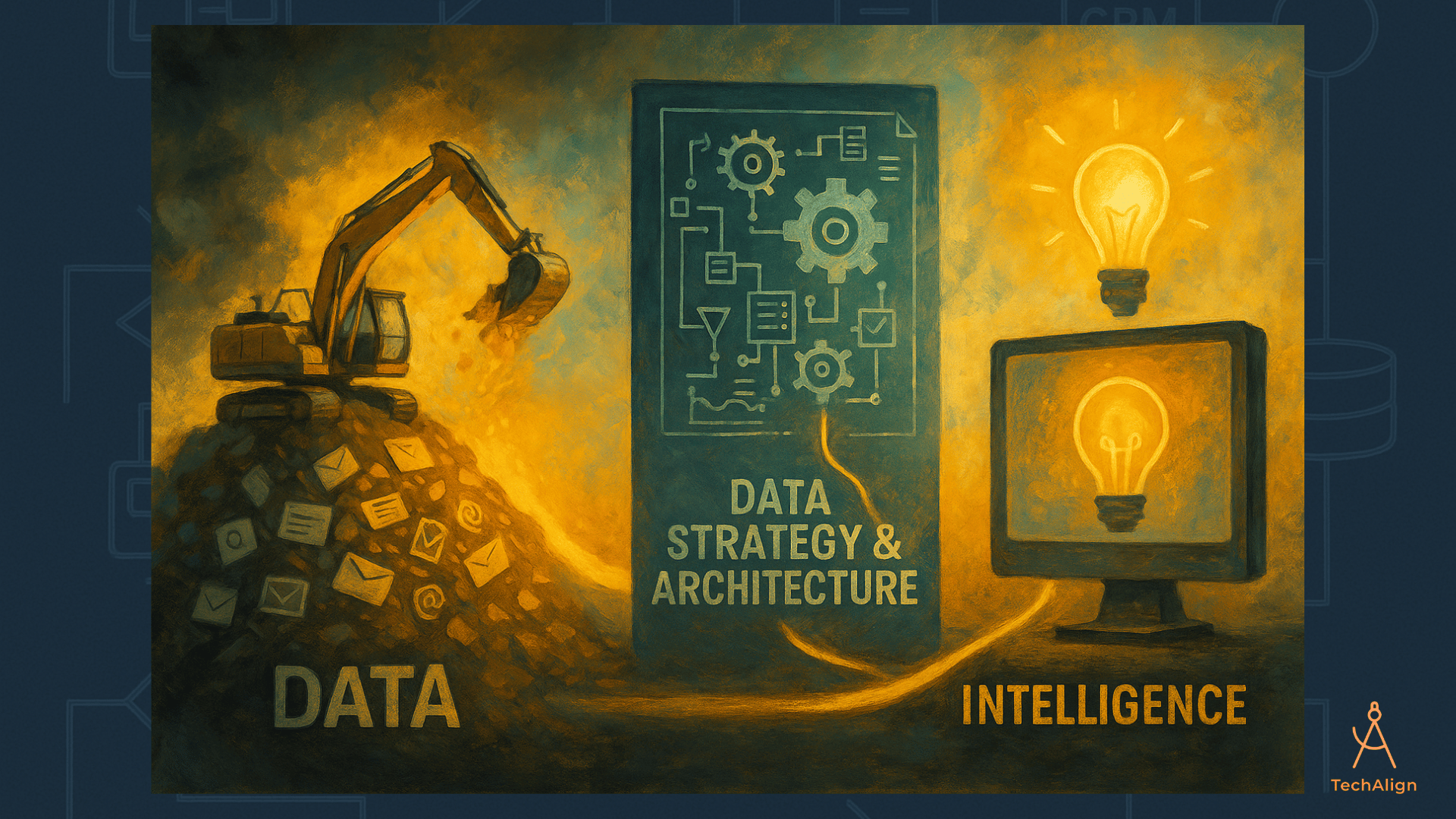
In the era of digital transformation, data has become our new raw material. And like crude oil, it’s only valuable once refined. Data science and big data related technologies promise to convert this untamed resource into actionable insights, competitive advantages, and even new revenue streams. The challenge lies in building the right data strategy foundation: governance, sourcing, integration, access, and tech stack – before we can unleash the creativity of algorithms and ML models.
New Raw Materials
We live in a world awash with data. Every click, sensor reading, social post, and transaction contributes to an ever-expanding repository of structured and unstructured data. The question isn’t whether data exists, it’s what we do with it. Effective data science transforms raw logs, images, and text into features that power machine learning, predictive analytics, and real-time AI decision making. But first, we must recognize data as a strategic asset, not an afterthought or consumable resource.
Why Data Governance?
Without governance, data becomes a liability. Imagine trying to bake a cake with unlabeled ingredients in unknown quantities and questionable freshness – the result is unlikely to be very tasty. Data governance establishes a recipe: clear definitions, quality standards, and stewardship roles. Controls such as lineage tracking, data catalogs, and access policies ensure that every dataset is designed to perform and inform. Governance also future-proofs your organization, enabling safe scaling of AI initiatives and compliance with evolving regulations.
Sourcing and Integration
Data flows in from myriad sources: internal systems (CRM, ERP, IoT sensors), external feeds (market data, social APIs, open government datasets), and growing universe of unstructured streams (video, audio, text). Each source varies in volume, velocity, and veracity. Practical integration patterns typically include:
- Deduplication and cleansing: automated routines to detect and reconcile duplicate records.
- Flexible storage: datalakes for raw ingestion, complemented by data warehouses or lakehouses for curated, query-ready datasets.
- Metadata management: tagging each data element with source, timestamp, and quality metrics to maintain freshness and relevance.
A balanced data architecture combines batch ingestion for deep history with streaming pipelines for real-time alerts, and lets you harness both retrospective and immediate insights.
Who Will Consume It?
Not all data is destined for the same audience. Some datasets power customer-facing dashboards or external APIs that generate revenue. Others feed internal analytics, product managers, or AI-driven automation. Clear consumption models dictate security, governance, and performance requirements. Role-based access controls, data anonymization for sensitive fields, and encryption-in-transit/rest are non-negotiable components of your data strategy. The resulting information and intelligence, embedded with fine-grained permissions, empower business users to discover and experiment without compromising compliance.
Platforms / Systems / Technology
Selecting the right technology stack is a contextual decision. Do you need massive parallel processing for petabyte-scale logs? Apache Spark or cloud-native serverless analytics fit the bill. Are low-latency, sub-second lookups your priority? Consider purpose-built databases like DynamoDB or use Redis for fast data caching. Data science teams often gravitate toward Python ecosystems, using packages like pandas, Dask, PyTorch, but success hinges on productizing and scaling these models: containerized microservices, feature stores, and MLOps pipelines. Ultimately, your platform choices must align with your team’s skills, data volumes, and SLAs.
Is Data Science or Art?
At its core, data science is a rigorous discipline: statistical foundations, algorithmic principles, and evaluation metrics. Yet feature engineering, the alchemy of extracting predictive signals from raw inputs, borders on artistry. Crafting the right features often requires domain intuition, creative experimentation, and a healthy tolerance for iterative failure. The best outcomes emerge when scientific method meets human creativity: hypothesis-driven feature creation, systematic A/B testing, and continuous refinement.
Bridging is all Together
Data science on big data isn’t a single sprint – it’s an orchestration of methods, technologies, and governance. Treat each layer: governance, integration, access, technology, and modeling as part of a cohesive ecosystem. Only then can you convert the raw material of data into the refined product of insight.
As you embark on your next analytics or AI initiative, ask yourself:
- Do we have clear ownership and quality gates for our data assets?
- Can we source and integrate new streams with minimal friction?
- Who needs access, and under what controls?
- Are our platform choices scalable, maintainable, and aligned with team expertise?
- How will we blend scientific rigor with creative feature engineering?
Answering these questions ensures that your data science efforts don’t just run experiments, but deliver real business value. Because in the age of information, clarity of process is the catalyst for innovation.
